
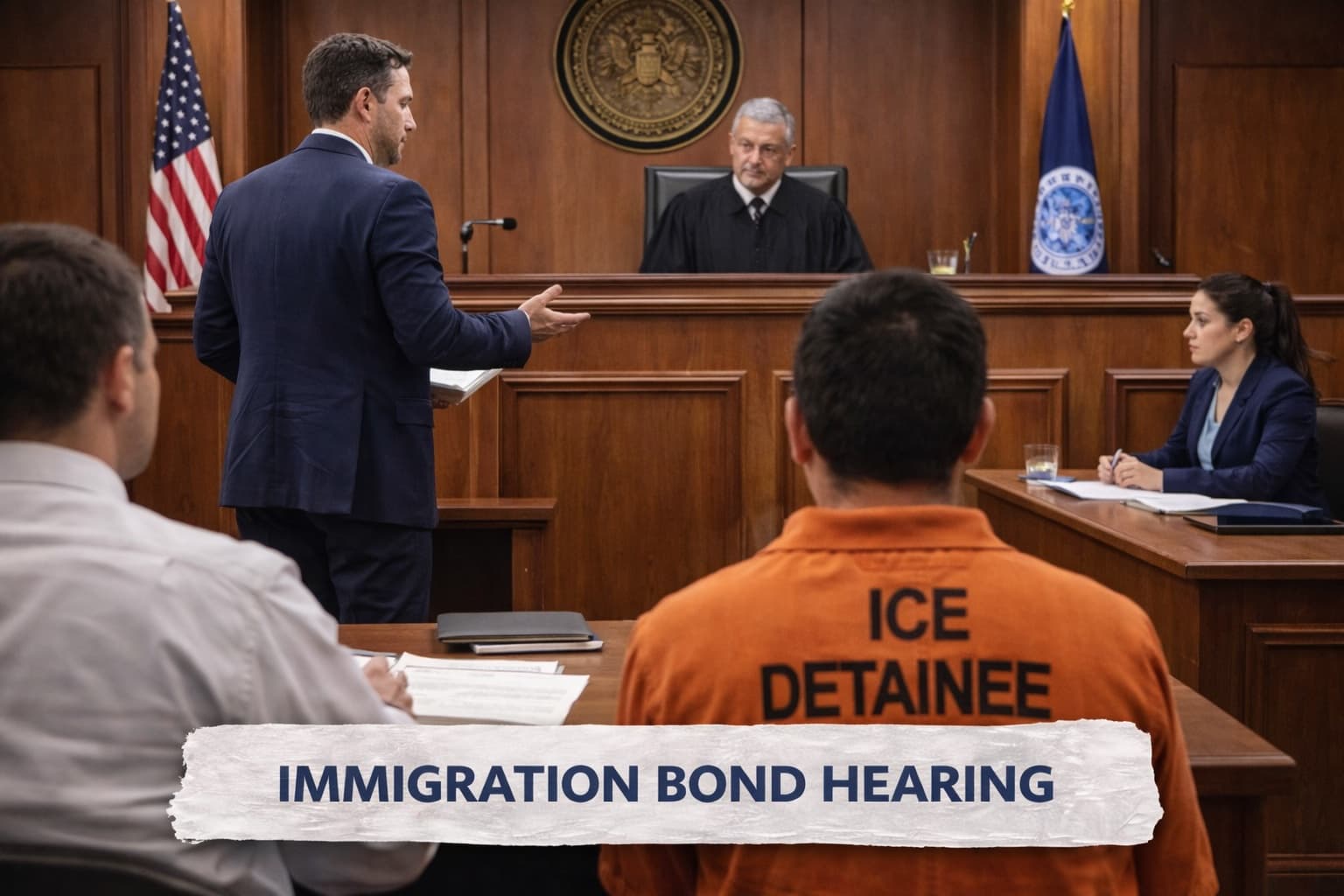
What Happens at an Immigration Bond Hearing?
When someone is detained by immigration authorities, family members often want to know whether their loved one can be released while their immigration case is pending. In some situations, the detained person may request an immigration bond hearing before an immigration judge.
An immigration bond hearing determines whether a detained immigrant may be released from detention while their deportation case moves forward.
Understanding how immigration bond hearings work can help families prepare and take the right steps quickly.
What Is an Immigration Bond Hearing?
An immigration bond hearing is a court proceeding where an immigration judge decides whether a detained immigrant may be released from custody.
The hearing typically takes place in immigration court after a person has been detained by immigration authorities.
During the bond hearing, the judge will decide:
- Whether the person qualifies for release from detention
- Whether the person poses a danger to the community
- Whether the person is a flight risk
- The amount of bond required for release
If bond is granted and paid, the individual may be released while their immigration case continues.
Who Qualifies for Immigration Bond?
Not everyone detained by immigration authorities is eligible for bond.
Some individuals may be subject to mandatory detention, particularly if they have certain criminal convictions or prior immigration violations.
However, many individuals may qualify for bond if they can demonstrate that they:
- Are not a danger to the community
- Are not likely to flee
- Have strong ties to the community
An immigration judge evaluates these factors during the hearing.
What Happens During the Bond Hearing?
Immigration bond hearings are typically shorter than other immigration court proceedings.
During the hearing:
- The immigration judge reviews the person’s immigration history
- The judge considers any criminal history
- The detainee or their attorney presents evidence supporting release
- The government attorney may argue against release
- The judge decides whether to grant bond and sets the bond amount
The judge may issue the decision immediately during the hearing.
Evidence That Can Help at a Bond Hearing
To increase the chances of being released, the detainee may present evidence showing strong community ties and responsibility.
Helpful evidence may include:
- Letters from family members
- Proof of employment
- Evidence of long-term residence in the United States
- Proof of family members who depend on the detainee
- Documentation showing community involvement
These materials help demonstrate that the individual is not a flight risk and is not a danger to the community.
How Much Is Immigration Bond?
If the immigration judge grants bond, they will set a bond amount.
Under immigration law, the minimum bond is typically $1,500, but in practice bond amounts are often higher depending on the circumstances.
Once the bond is paid to immigration authorities, the detained individual may be released from detention while their immigration case continues.
What Happens After Someone Is Released on Bond?
If a person is released on immigration bond, they must still attend all future immigration court hearings.
Failing to appear in court may result in:
- A removal order issued in absentia
- Loss of the bond money
- Possible detention again
It is critical for individuals released on bond to comply with all immigration court requirements.
Can a Bond Decision Be Appealed?
In some cases, bond decisions may be reviewed by the Board of Immigration Appeals (BIA).
Additionally, individuals may request a bond redetermination hearing if circumstances change.
Because immigration bond law can be complex, legal guidance is often helpful.
Why an Immigration Attorney Can Help
Immigration bond hearings often happen quickly, and preparation can make a significant difference.
An experienced immigration attorney can help by:
- Preparing evidence for the bond hearing
- Presenting arguments to the immigration judge
- Demonstrating that the detainee is not a danger or flight risk
- Requesting bond redetermination if necessary
Proper preparation may increase the chances of release from detention.
Immigration Detention and Bond Hearing Help
If a family member has been detained by immigration authorities, it is important to act quickly.
At Gonzalez Legal, P.C., we assist families with:
- Immigration bond hearings
- Deportation defense
- Motions to reopen immigration cases
- Immigration court representation
📞 Contact Gonzalez Legal, P.C. today to schedule a consultation and discuss your immigration case.
Frequently Asked Questions
How long does it take to get a bond hearing?
In many cases, bond hearings can be scheduled within days or weeks after detention, depending on the immigration court’s schedule.
What happens if bond is denied?
If bond is denied, the individual may remain in detention while their immigration case proceeds, although other legal options may still be available.
Can family members attend a bond hearing?
In many situations, family members may attend the hearing and may provide letters or other supporting evidence.
What happens if the bond is paid?
Once the bond is paid, the individual may be released from immigration detention, but must continue attending all future court hearings.

Emmanuel Gonzalez, Esq.
Latest Posts
 by Emmanuel Gonzalez, Esq.
Su Fecha de Prioridad Finalmente Está Vigente—¿Y Ahora Qué?
Una fecha de prioridad “vigente” puede ser un paso muy importante, pero no siempre significa que una residencia o visa de inmigrante será emitida...
by Emmanuel Gonzalez, Esq.Your Priority Date Is Finally Current, Now What?
A “current” priority date can be a major milestone, but it does not always mean a green card or immigrant visa will be issued immediately. Families...