
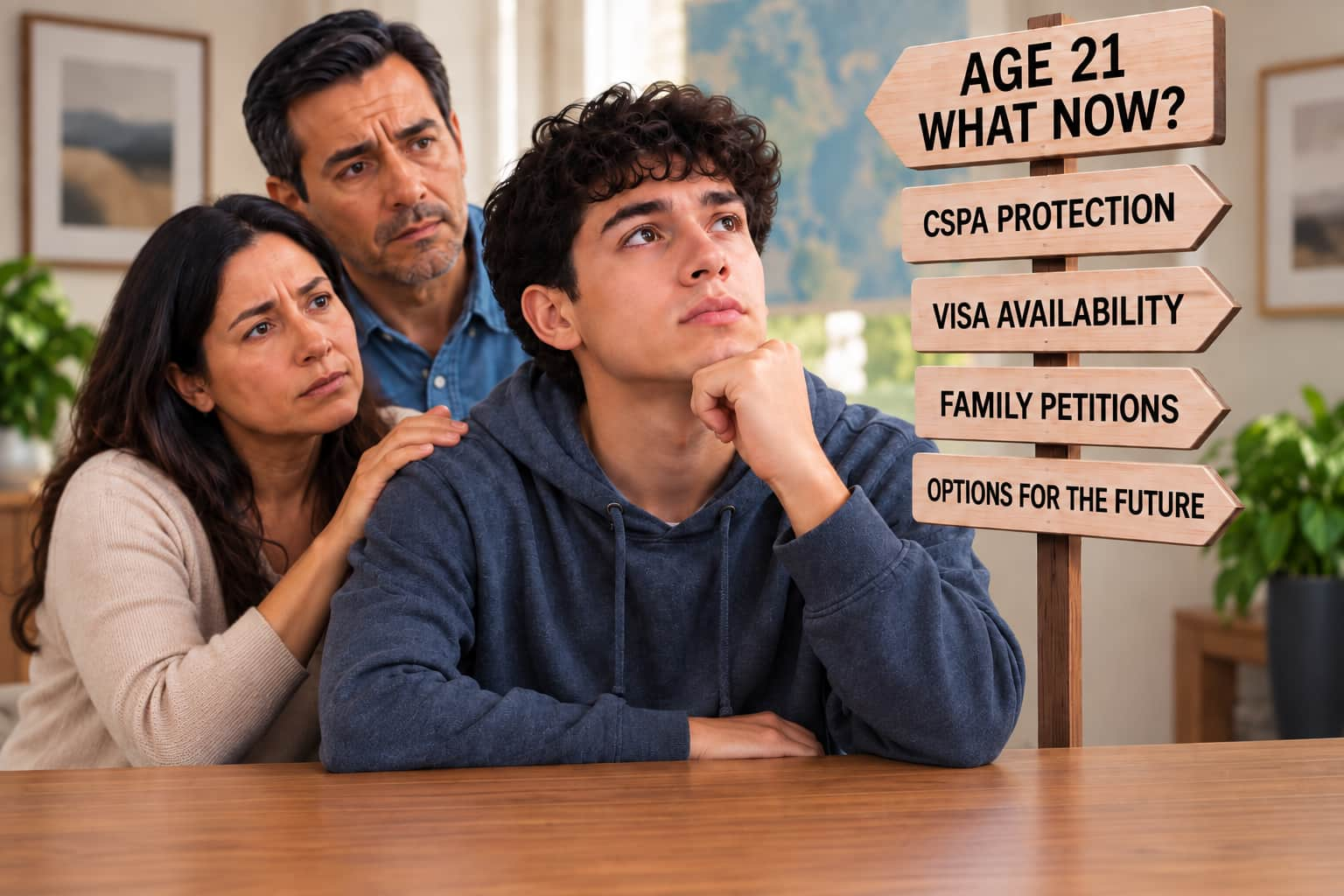
My Child Is Turning 21! Will They Age Out of My Immigration Case?
Understanding the Child Status Protection Act, visa availability and the “sought to acquire” requirement before it is too late.
Few immigration issues create more anxiety for parents than watching a child approach age 21 while the family waits years for a visa. Many parents assume that the child automatically loses the case on the 21st birthday. Others assume that filing the petition while the child was young permanently protects the child.
Neither assumption is always correct. The Child Status Protection Act, commonly called CSPA, can protect some children from “aging out,” but the calculation and procedural requirements can be complicated.
Why does age 21 matter?
Many immigration classifications define a “child” as an unmarried person under 21. When a case takes years to process, a beneficiary can reach 21 before a visa becomes available. CSPA was enacted to reduce some of the harm caused by government processing delays.
CSPA age is not always biological age
For many family-preference and employment-based derivative cases, CSPA uses a statutory formula that generally looks at the beneficiary’s age when a visa becomes available and subtracts the amount of time the qualifying petition was pending. The exact calculation depends on the immigration category and facts.
The “sought to acquire” requirement can be critical
For many beneficiaries relying on CSPA protection, preserving that protection also requires taking qualifying steps to seek lawful permanent residence within one year after a visa becomes available, subject to the statute and applicable exceptions. Families should not assume that simply waiting for NVC to contact them will always preserve the child’s position.
Why the Visa Bulletin matters
Visa availability is central to many CSPA calculations. The September 2026 Visa Bulletin has advanced dates in several categories, while also warning that retrogression may become necessary as additional demand materializes. A case can therefore move into a period of visa availability and later retrogress, making timely analysis especially important.
Common CSPA mistakes
- Looking only at the child’s birthday and never calculating CSPA age.
- Assuming the I-130 filing date permanently freezes the child’s age in every category.
- Missing the one-year sought-to-acquire period.
- Failing to analyze how the petitioner’s naturalization or a change in marital status affects the category.
- Waiting until the child is already 21 to obtain a case-specific calculation.
Legal disclaimer: This article is for general informational purposes only and does not constitute legal advice. Immigration rules and policies can change quickly. Eligibility and strategy depend on the facts of each individual case.

Emmanuel Gonzalez, Esq.
Latest Posts
 by Emmanuel Gonzalez, Esq.
¡Mi hijo está por cumplir 21 años! ¿Quedará fuera de mi caso de inmigración?
Cómo entender CSPA, la disponibilidad de visas y el requisito de “sought to acquire” antes de que sea demasiado tarde. Pocas situaciones migratorias...
by Emmanuel Gonzalez, Esq.My Child Is Turning 21! Will They Age Out of My Immigration Case?
Understanding the Child Status Protection Act, visa availability and the “sought to acquire” requirement before it is too late. Few immigration issues...