
Denied an Immigrant Visa for Public Charge? A New Bond May Be an Option
The State Department is using a public-charge bond pilot program in selected immigrant-visa cases, but applicants cannot simply choose to post a bond on their own.
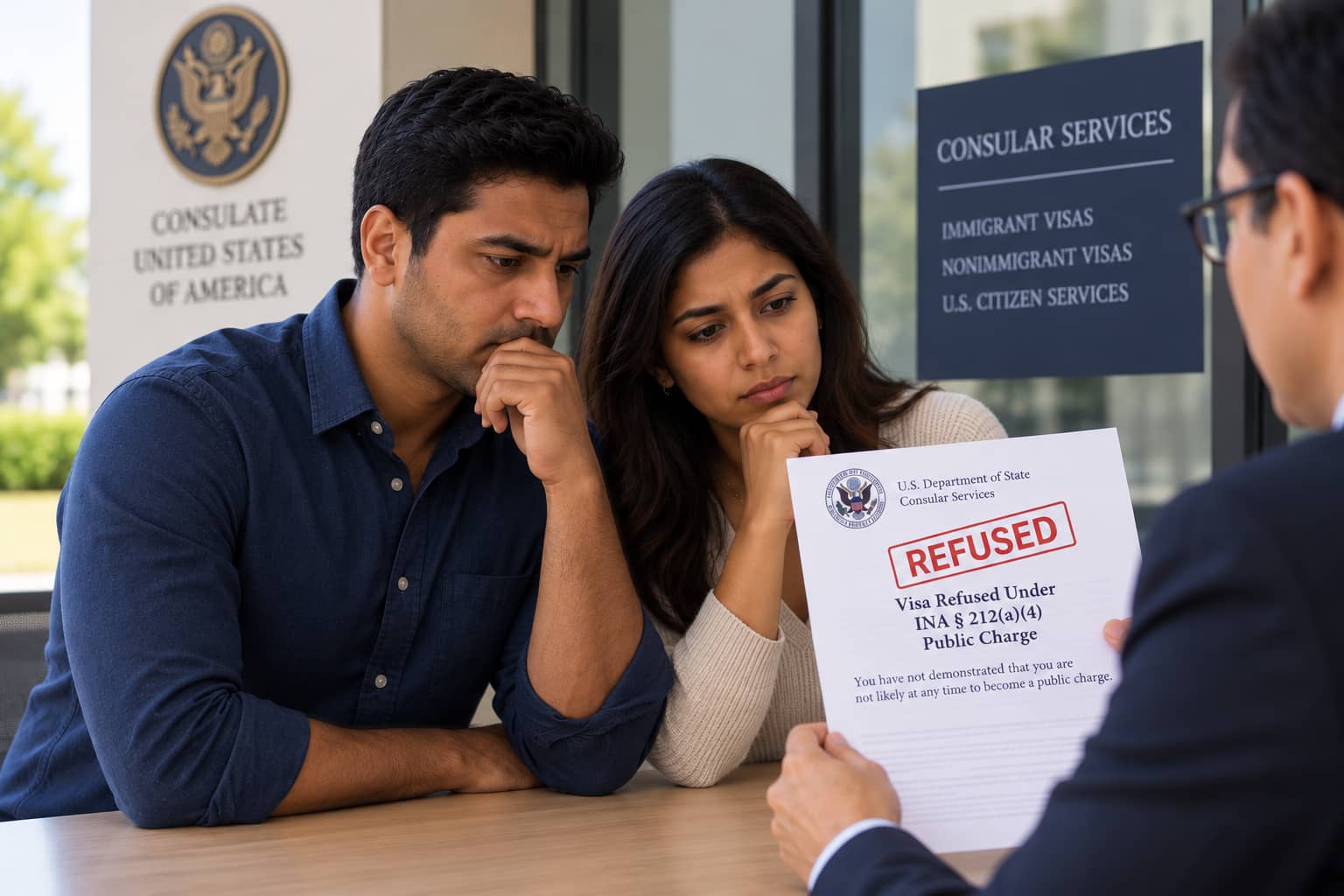
A public-charge refusal at a U.S. consulate can be devastating for a family that has already spent months or years completing an immigrant-visa case. In 2026, the Department of State announced that it is using a pilot procedure that permits consular officers, in selected cases, to require an immigrant-visa applicant to apply for a Public Charge Bond with USCIS. The program creates an additional possible route for certain applicants, but it is not an automatic cure.
What is a public-charge bond?
A public-charge bond is a financial bond connected to the public-charge ground of inadmissibility. Under the pilot, a consular officer may determine that an applicant who has been refused under INA §212(a)(4) can seek to overcome that refusal through a bond, provided the applicant is otherwise eligible for the immigrant visa.
You cannot simply decide to file a public-charge bond because you are worried about your case. The Department of State says selected applicants will be notified by a consular officer when a bond is required.
Is the bond a substitute for financial evidence?
Not necessarily. The State Department explains that applicants may seek to overcome a public-charge refusal by providing sufficient evidence that they are not likely to become a public charge. The bond is an additional method being used in selected cases, not a replacement for preparing strong financial evidence.
How much is the bond?
There is no single amount for every applicant. According to the Department of State, the consular officer sets the amount based on the totality of the circumstances and the governing bond regulation. Families should therefore be cautious about anyone promising a specific bond amount before the consulate has made its determination.
Can the money ever be returned?
Yes, a public-charge bond can potentially be cancelled and the money returned when the legal requirements for cancellation are met. Conversely, a bond can be breached or forfeited under applicable rules. Anyone asked to post one should understand the obligations before paying.
What should you do after a §212(a)(4) refusal?
- Read the refusal notice carefully and identify exactly what the consular officer requested.
- Do not assume the I-864 alone resolves every public-charge concern.
- Gather updated income, assets, employment, insurance and household evidence where relevant.
- Do not submit a bond unless the government instructs you to do so.
- Review whether another ground of inadmissibility is also present.
The larger lesson
A public-charge refusal should be treated as a legal and evidentiary problem, not merely a request to send more paperwork. The applicant should understand why the officer was concerned and address the weakness directly. In selected cases, a public-charge bond may become part of that strategy.
A public-charge bond may offer an additional path in selected immigrant-visa cases, but it is government-directed, fact-specific, and not an automatic right or universal solution.
Official Sources
Source: U.S. Department of State, “Public Charge Bonds for Immigrant Visa Applicants,” updated Aug. 5, 2026.
Source: USCIS, Public Charge Bond guidance and Policy Manual provisions on maintaining, substituting and cancelling bonds.
Disclaimer: This article is for general informational purposes only and does not constitute legal advice. Immigration rules, fees, procedures, and agency guidance can change. Individual cases should be evaluated based on their specific facts and current law.

Emmanuel Gonzalez, Esq.
Latest Posts
 by Emmanuel Gonzalez, Esq.
¿Le Negaron una Visa de Inmigrante por Carga Pública? Un Nuevo Bono Podría Ser una Opción
El Departamento de Estado está utilizando un programa piloto de bonos de carga pública en determinados casos de visa de inmigrante, pero los solicitantes...
by Emmanuel Gonzalez, Esq.Denied an Immigrant Visa for Public Charge? A New Bond May Be an Option
The State Department is using a public-charge bond pilot program in selected immigrant-visa cases, but applicants cannot simply choose to post a bond on...