
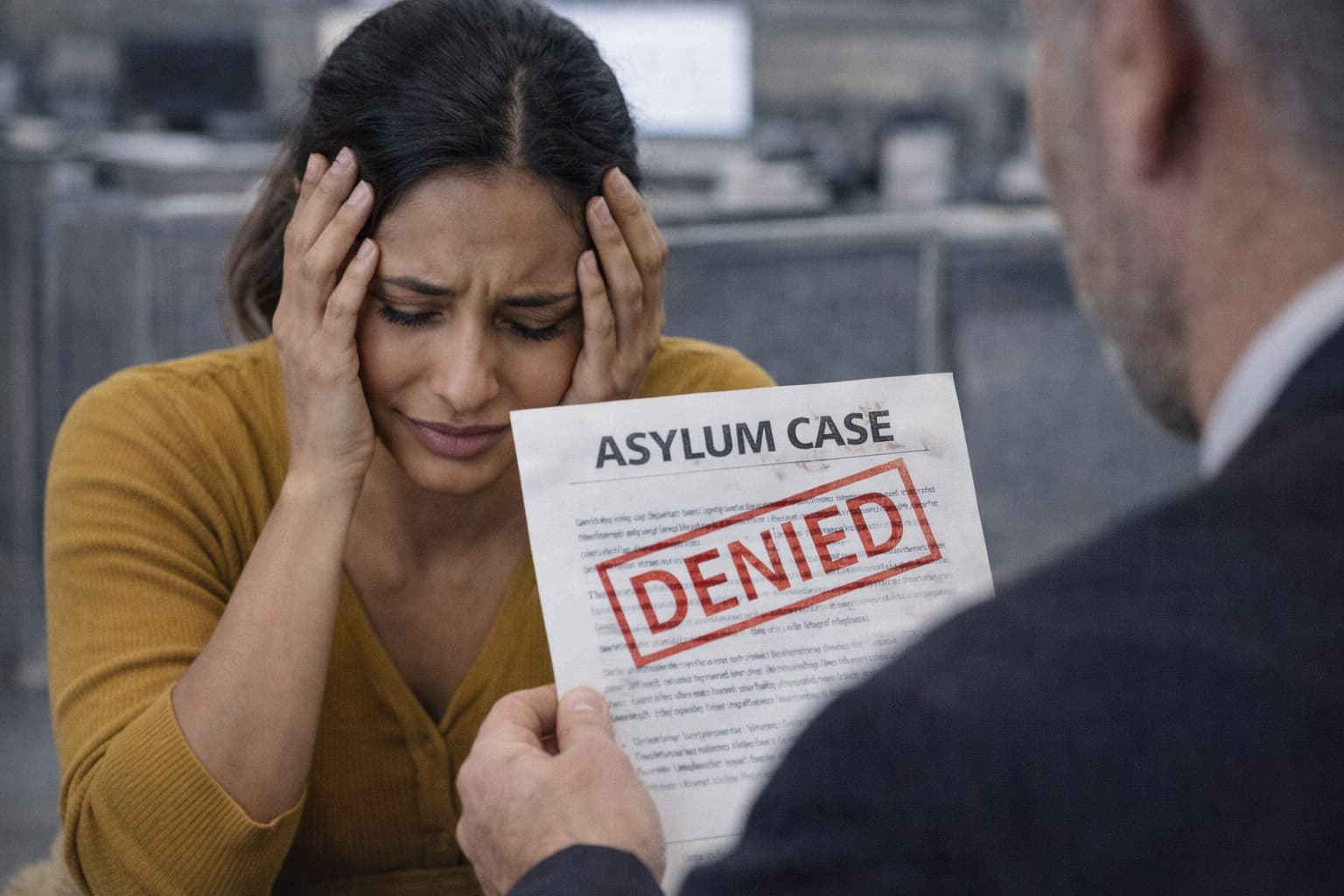
The Death of an Asylum Case: Common Reasons Asylum Applications Get Denied
For many asylum seekers, applying for protection in the United States is a matter of life or death. Yet every year, thousands of asylum cases are denied—not always because the danger isn’t real, but because the case fails to meet strict legal and procedural requirements. Understanding why asylum cases die is essential to avoiding common mistakes.
Below are the most frequent reasons asylum applications are denied, and how these issues often end a case.
1. The Harm Does Not Fit a Protected Ground
One of the most common reasons asylum cases fail is that the harm suffered does not fall under one of the five protected grounds required by U.S. law:
- Race
- Religion
- Nationality
- Political opinion
- Membership in a particular social group
Danger alone is not enough. Fleeing crime, poverty, corruption, or generalized violence—no matter how serious—is often not legally sufficient unless it is clearly connected to a protected ground.
Many asylum cases die because applicants cannot clearly explain why they were targeted, not just what happened to them.
2. Failure to Prove the “Nexus” (The Why)
Even when serious harm occurred, asylum can be denied if the applicant cannot prove the nexus, meaning the persecutor harmed them because of a protected characteristic.
If the government believes the harm was:
- Random
- Criminal
- Personal
- Financial
- Opportunistic
rather than targeted for a protected reason, the case may fail. Weak nexus arguments are one of the fastest ways an asylum case collapses.
3. Credibility Problems (Even Small Ones)
Credibility is everything in an asylum case.
Inconsistencies between:
- The asylum application
- The personal statement
- Prior immigration records
- Interview testimony
- Court testimony
can seriously damage a case. Even small differences in dates, locations, or sequences of events can raise red flags.
Trauma, fear, and language barriers often explain inconsistencies, but if they are not properly addressed, credibility findings alone can kill an asylum case.
4. Weak or Poorly Defined “Particular Social Group”
Many asylum claims rely on membership in a particular social group, which has become one of the most heavily scrutinized areas of asylum law.
Cases often die because the proposed group is:
- Too broad
- Poorly defined
- Not socially recognized in the home country
- Not supported by country conditions
Claims involving domestic violence, family membership, gender, or gang-related harm require careful legal framing. Without it, these cases are frequently denied.
5. Missing or Weak Evidence
While asylum can be granted based on testimony alone, adjudicators expect corroborating evidence when it is reasonably available.
Common evidentiary weaknesses include:
- No police reports or explanation for why none exist
- No medical records after injuries
- No affidavits from witnesses or family
- No country condition evidence supporting the claim
When evidence is missing and not explained, decision-makers may conclude the case is not credible or insufficient.
6. Filing Too Late (One-Year Bar)
Asylum applicants generally must file within one year of entering the United States.
Many cases die automatically because:
- The application was filed late
- No exception was properly argued
- The applicant did not understand the deadline
Late filing requires proving either changed circumstances or extraordinary circumstances—a legal standard many applicants fail to meet without guidance.
7. Prior Immigration Violations or Criminal Issues
Certain issues can seriously damage or destroy an asylum case, including:
- Prior deportation orders
- Fraud or misrepresentation
- False claims to U.S. citizenship
- Certain criminal convictions
Even when asylum eligibility exists, these issues can lead to discretionary denials or legal bars.
8. Poor Interview or Court Preparation
Many strong cases fail simply because the applicant was not prepared.
Common mistakes include:
- Rambling or unfocused testimony
- Contradicting written statements
- Failing to explain key facts
- Becoming overwhelmed under questioning
Asylum interviews and hearings are stressful. Without preparation, even truthful applicants may struggle to clearly present their case.
9. Lack of Legal Representation
Asylum law is one of the most complex areas of immigration law. Applicants without attorneys often:
- Misidentify their protected ground
- Submit incomplete applications
- Fail to explain legal elements
- Miss deadlines or procedural requirements
Statistically, asylum seekers with legal representation are significantly more likely to succeed than those without.
10. Rushed or Overburdened Adjudication
The asylum system is severely backlogged. Officers and judges handle enormous caseloads, which can lead to:
- Short interviews
- Aggressive questioning
- Limited opportunity to clarify testimony
Applicants who are not well organized and prepared may not get a second chance to explain their story.
How to Keep Your Asylum Case Alive
To avoid the “death” of an asylum case:
✅ Get legal advice early
✅ Clearly identify your protected ground
✅ Prepare a detailed, consistent personal statement
✅ Gather and explain evidence
✅ Prepare thoroughly for interviews or hearings
✅ Never guess, exaggerate, or change your story
Final Thoughts
Most asylum cases are not denied because the applicant lied or lacked fear—they are denied because the case was not legally or procedurally strong enough. The asylum process demands clarity, consistency, and careful legal framing.
Asylum is still possible, but today more than ever, a well-prepared case can be the difference between protection and removal.
Need Help With Your Asylum Case?
Contact an experienced immigration attorney to review your eligibility and strengthen your application before filing.

Gonzalez Legal P.C.
Latest Posts
 by Gonzalez Legal P.C.
The Death of an Asylum Case: Common Reasons Asylum Applications Get Denied
For many asylum seekers, applying for protection in the United States is a matter of life or death. Yet every year, thousands of asylum cases are denied—not...
by Gonzalez Legal P.C.La Muerte de un Caso de Asilo: Razones Comunes por las Que Se Deniegan las Solicitudes de Asilo
Para muchos solicitantes de asilo, solicitar protección en Estados Unidos es una cuestión de vida o muerte. Sin embargo, cada año se deniegan miles de casos...