
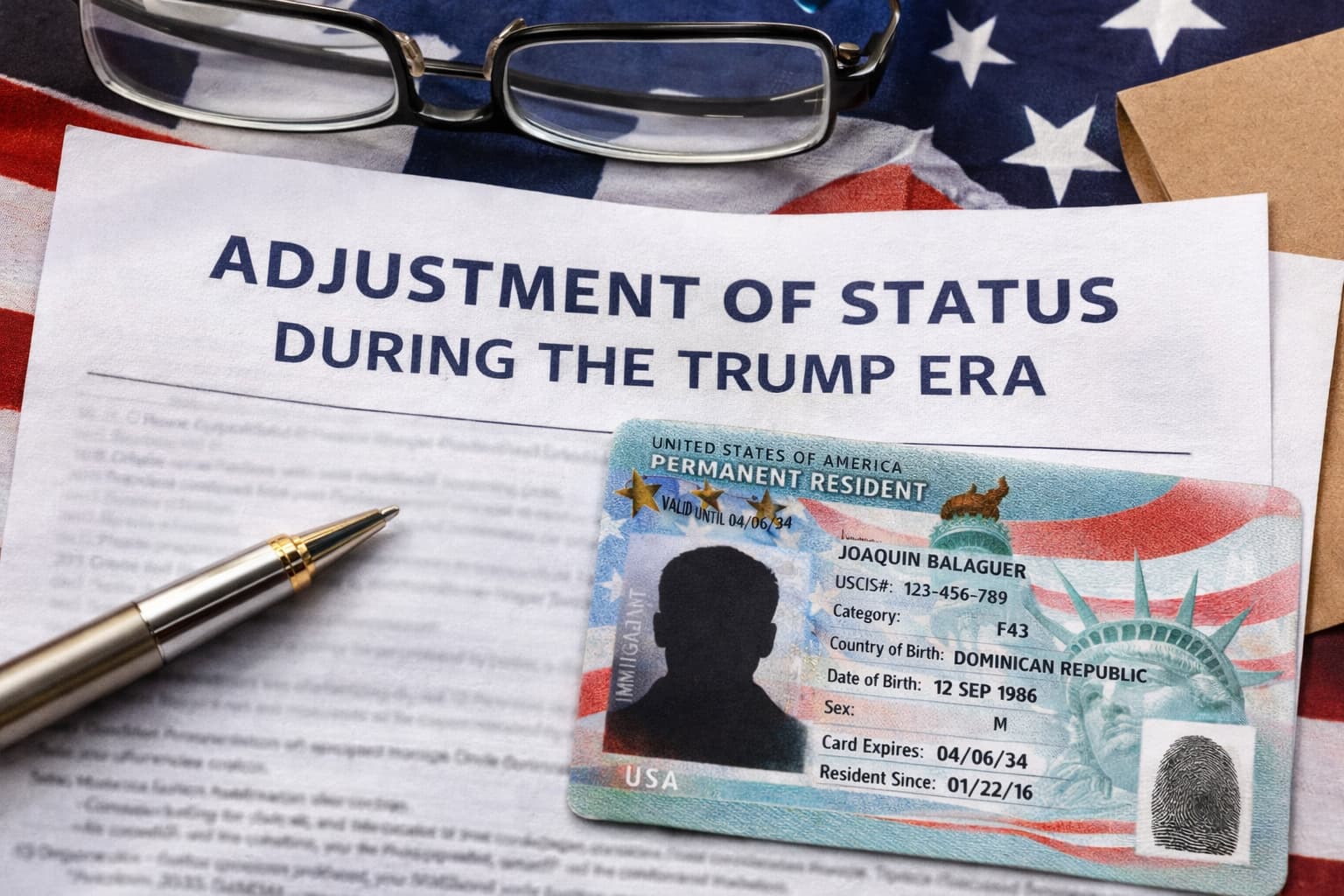
Doing an Adjustment of Status During the Trump Era: What Applicants Need to Know
Adjustment of Status (AOS) is the process that allows certain individuals who are already in the United States to apply for a green card without having to leave the country. For many families, this process represents stability, safety, and the opportunity to build a future together. However, during the Trump era, Adjustment of Status became more stressful and unpredictable for many applicants.
During this period, immigration policies shifted toward stricter enforcement and closer scrutiny of applications. While Adjustment of Status was never eliminated, the process became slower, more complicated, and less forgiving of mistakes. Even strong cases often faced delays, additional requests for evidence, or unexpected complications.
One major change was an increase in Requests for Evidence (RFEs) and Notices of Intent to Deny (NOIDs). Immigration officers were encouraged to carefully examine every detail of an application. Missing documents, inconsistencies, or unclear explanations were more likely to cause delays or denials than in prior years.
Financial stability also became a bigger focus. The government placed renewed attention on whether applicants were likely to become a “public charge,” meaning dependent on public benefits. This caused anxiety for many families, even those who were eligible to apply, and made proper financial documentation more important than ever.
Processing times also increased significantly. Many applicants waited months, or even years, longer than expected for decisions. These delays often affected work authorization, travel plans, and family unity, creating emotional and financial stress.
Overall, Adjustment of Status during the Trump era required patience, careful preparation, and professional guidance. While the process was still possible, it was far less predictable, and small mistakes could have serious consequences.
Practical Tips for Adjustment of Status Applicants
- Work with an experienced immigration attorney. Policies changed quickly during this time, and professional guidance helped applicants avoid costly mistakes and delays.
- Submit complete and well-organized applications. Missing documents or poorly prepared forms often resulted in Requests for Evidence or denials.
- Be honest and consistent. All information provided to USCIS must match prior immigration records. Inconsistencies can raise red flags and slow down your case.
- Prepare strong financial documentation. Proof of income, tax returns, affidavits of support, and employment verification became especially important.
- Expect delays and plan ahead. Processing times were longer than usual, so applicants needed to plan for extended waits for work permits and travel authorization.
- Avoid unnecessary travel. Leaving the U.S. without proper advance parole could result in serious immigration consequences.
- Respond promptly to USCIS notices. RFEs and other notices often had strict deadlines, and missing them could result in denial.
- Stay informed but cautious. Immigration news during this period was often alarming. Rely on trusted legal advice rather than rumors or social media.
In conclusion, while Adjustment of Status remained available during the Trump era, it required more preparation and caution than in previous years. Understanding the risks, staying organized, and seeking proper legal advice helped many applicants successfully navigate an otherwise challenging immigration environment.

Gonzalez Legal P.C.
Latest Posts
 by Gonzalez Legal P.C.
Why Are Asylum Applications Getting Harder to Get Approved? Understanding the Rising Bar
For many people fleeing violence, persecution, and danger, asylum in the United States represents safety and hope. However, in recent years, asylum...
by Gonzalez Legal P.C.¿Por Qué Cada Vez Es Más Difícil Que Se Aprueben las Solicitudes de Asilo? Comprendiendo el Aumento de Requisitos
Para muchas personas que huyen de la violencia, la persecución y el peligro, el asilo en Estados Unidos representa seguridad y esperanza. Sin embargo, en...